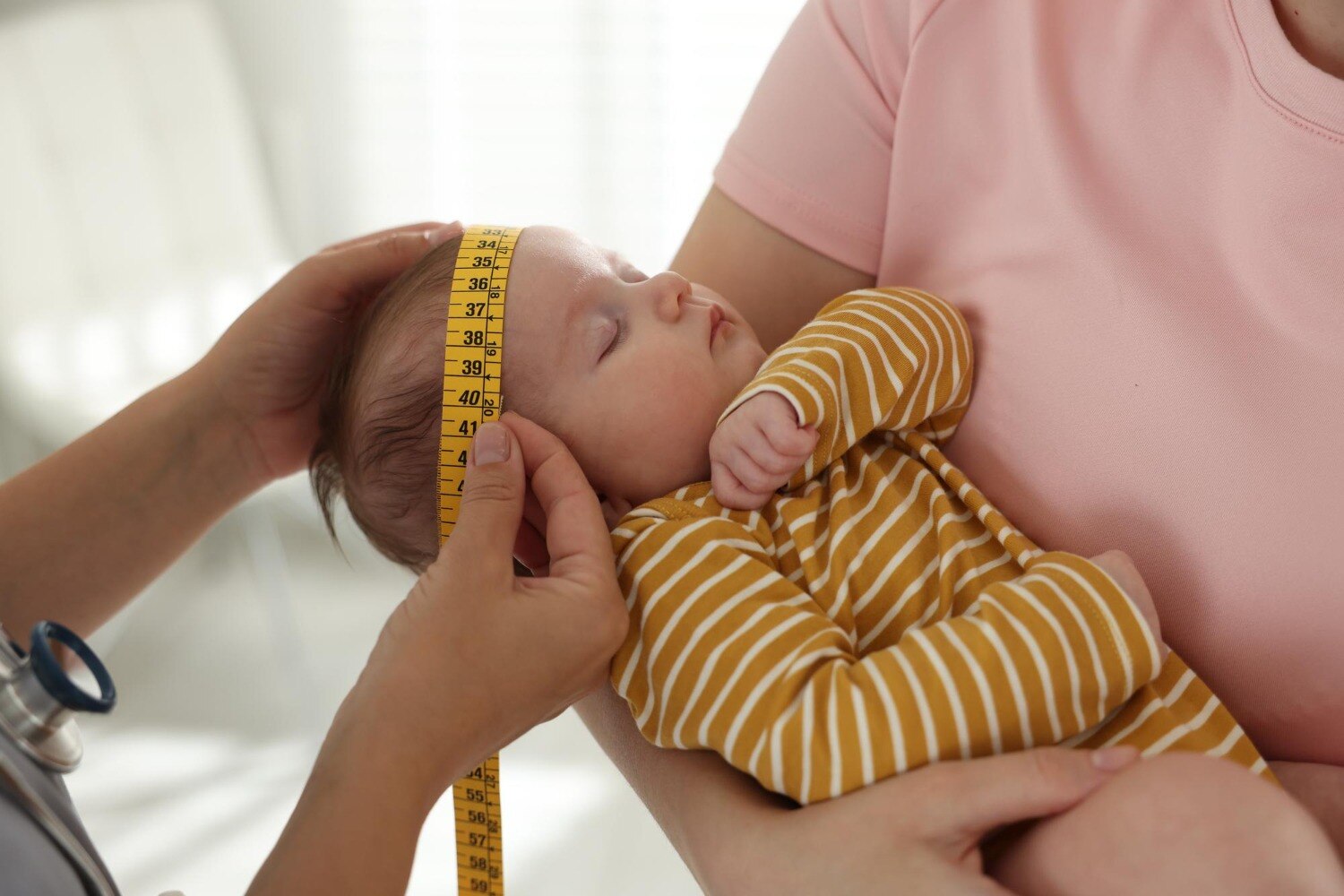
head circumference in infancy Use a calibrated infant scale, minimal clothing, and no shoes. Measure length on a firm, level length board with the head held against the fixed end and legs fully straight; two trained people improve accuracy. Compare weight with length, not BMI. From 2 years Weight, standing height, and BMI-for-age Use a stadiometer on a level floor, with shoes removed, heels together, and the head positioned correctly. BMI-for-age becomes the standard proportional measure. Technique can create a false growth change. A wriggling child, a nappy, shoes, a tilted scale, bent knees, or a tape placed loosely around the head can make one visit look higher or lower than the last. Repeat an unexpected result before interpreting it. Clinicians plot measurements on an age- and sex-specific reference, such as WHO standards for young children and CDC charts from age 2. Switching chart systems can change the apparent percentile without any biological change. A single result matters less than the pattern across accurate measurements. How often should children be measured, and which growth reference applies? Routine checks belong in the newborn period and at scheduled health visits: around 3–5 days after birth, then at 1, 2, 4, 6, 9, 12, 15, 18 and 24 months, followed by annual visits through the preschool years and school years. Add checks during puberty or when feeding, illness, or treatment could affect growth. Visual impressions are not enough. Age or circumstance Reference and interpretation Measurement focus Birth to 2 years WHO Child Growth Standards, using sex-specific charts Weight, recumbent length, head circumference, and weight-for-length Age 2 to 19 years CDC age- and sex-specific charts: https://www.cdc.gov/growthcharts/ Standing height, weight, and BMI-for-age Born preterm Use a preterm chart initially, then correct age for prematurity when plotting later measurements Interpret progress against gestational age Health conditions The clinician may use condition-specific references and focus on the child’s individual trend Do not judge one percentile alone During infancy and the toddler years, measure length lying on a length board; from age 2, measure standing height with a stadiometer. Use a calibrated scale, minimal clothing, and no shoes, then repeat an unexpected result. Corrected age prevents a normally growing premature infant from appearing artificially small. Family size, sex, illness, feeding, and development also matter. Crossing two major percentile spaces warrants review, not an automatic diagnosis. How do you read the pattern on a growth chart? Read a growth chart as a moving pattern, not a pass-or-fail score. A percentile shows how a child’s measurement compares with children of the same age and sex: the 25th percentile means about 25% of the reference group measured lower, not that the child is less healthy. Healthy children can remain at either end of the chart. Tracking along a curve means measurements continue near the child’s established percentile lines over time. That pattern often fits the child’s family size. A single percentile cannot diagnose a problem, while serial, accurately plotted measurements reveal growth velocity—the rate of weight, length, height, or head-circumference change between visits. Z-scores express the same position differently: they show how far a measurement lies above or below the reference median in standard-deviation units. A z-score moving steadily downward or upward can reveal a change that the percentile view makes less obvious. Crossing percentile channels means moving across major spaces between percentile lines. Crossing one channel can occur during normal adjustment, but dropping across two or more major channels deserves clinical review, especially with feeding difficulty, illness, delayed development, or prematurity. The pattern must be checked on the correct chart and with corrected age when needed; mixing chart systems can create an apparent shift without biological growth. An unexpected point should be remeasured before interpreting it. What can a growth pattern reveal beyond a child’s size? A changing growth pattern can reveal feeding, medical, weight-related, and developmental concerns before a child looks unwell. A drop across two or more major percentile spaces raises concern about faltering growth, but it is not a diagnosis; birth size, prematurity, family pattern, feeding, illness, and development still matter. Pattern What it may flag Assessment focus Slowing weight or length gain Feeding difficulty, inadequate calorie intake, chronic disease, endocrine problems, or malabsorption Detailed feeding history, eating environment, medical history, family heights, and examination Persistently high weight-for-length or rising BMI-for-age Excessive weight gain linked with diet, activity, sleep, medication, family factors, or illness Review habits and medical causes, not automatic restrictive dieting Rapid or slow head growth A need to check development, examination findings, and parental head size Interpret the trend alongside neurologic and developmental findings Growth monitoring should include development and general health, not measurements alone. Arrange clinical assessment if poor growth occurs with persistent vomiting or diarrhoea, breathing difficulty, lethargy, feeding difficulty, developmental regression, or another systemic symptom. https://www.nice.org.uk/guidance/ng75 A single unusual head-circumference result does not establish a neurologic disorder. Repeat unexpected findings using accurate technique, and seek assessment when the change persists or the child has symptoms. Extensive laboratory testing is not routinely needed when examination and history reveal no other clinical signs. How can you prepare for a more useful growth appointment? Bring the child’s health record and a short family history. Include previous measurements, birth weight and gestational age, feeding history, vomiting or diarrhoea history, illnesses, medicines, developmental concerns, and the heights of both parents. Note whether the baby was premature, because age correction can change chart interpretation. 1. Write down what the child eats or drinks over a typical day, including breastfeeding frequency, formula volume, solid foods, and feeding difficulties. Record appetite, choking, prolonged feeds, and changes since the last visit. 2. Keep a home log with dates, symptoms, meals, vomiting, diarrhoea, and wet nappies. It helps the clinician identify timing and patterns, but household scales and informal length checks do not replace a calibrated scale, length board, or stadiometer measurement. 3. Ask how each new result compares with the child’s established pattern. A fall across two or more major percentile spaces needs review, not an automatic diagnosis; birth size, prematurity, illness, feeding, development, and family build all matter. Seek pediatric support before the next routine appointment for persistent vomiting or diarrhoea, feeding difficulty, breathing problems, lethargy, developmental regression, or poor intake. Dr Preeti Goel Best Pediatrician/Child Specialist can assess the complete pattern rather than treating one home reading as proof of a growth problem. Frequently asked questions Which measurements show whether a baby is growing well? Weight, body length or height, and head circumference provide the clearest picture of growth and proportion. Measuring all three over time is more useful than checking weight alone. How often should children be measured, and which growth reference applies? Measure children during routine health visits and whenever a clinician identifies a concern. WHO Child Growth Standards apply from birth to five years; older children are assessed with an age-appropriate reference chart. How do you read the pattern on a growth chart? Plot each measurement by age and follow the curve over time. A steady pattern matters more than a single percentile, while crossing several major percentile lines requires clinical review. What can a growth pattern reveal beyond a child’s size? Growth patterns can reveal feeding difficulties, inadequate nutrition, chronic illness, hormonal problems, or differences in body proportion that need further assessment. How can you prepare for a more useful growth appointment? Bring the child’s health records, previous growth measurements, feeding details, medication information, and a list of symptoms or questions.">
+918048036336
Currently it only shows your basic business info. Start adding relevant business details such as description, images and products or services to gain your customers attention by using Boost 360 android app / iOS App / web portal.